
Best Web Hosting Comparison 2026: Pricing, Features & Use Cases
Best web hosting is not a single product category. A beginner blog, a small business site, a WooCommerce store, and an agency managing dozens of WordPress installations need different hosting models. This 2026 comparison organizes the major providers covered on HostHuby by price, platform type, resources, and use case rather than treating every host as interchangeable.
Pricing below was checked in September 2026 and reflects current published promotional or annual rates. Hosting offers change frequently, so verify the provider’s checkout page before purchasing.
Best Web Hosting Providers Compared
| Provider | Current entry price | Hosting model | Good fit for |
|---|---|---|---|
| Hostinger | Premium around $2.99/mo on long-term offer | Managed web / WordPress hosting | Beginners, creators, small businesses |
| DreamHost | Launch $2.89/mo for 1 year | Web hosting | Multi-site users, blogs, value-focused businesses |
| SiteGround | StartUp $2.99/mo for 12 months | Managed WordPress hosting | WordPress users wanting integrated caching, backups, support |
| Bluehost | Starter $3.99/mo on 36-month offer | Managed WordPress hosting | Beginners and small businesses |
| GreenGeeks | Lite $2.95/mo for 12 months | Shared / WordPress hosting | Eco-conscious sites and users needing more entry storage |
| Hosting.com | Starter $3.99/mo for 1 year | Shared / performance hosting | Traditional hosting users wanting LiteSpeed and NVMe |
| Cloudways | DigitalOcean from about $11/mo | Managed cloud hosting | Developers, agencies, scalable applications |
| Rocket.net | $25/mo billed annually | Premium managed WordPress | High-traffic WordPress sites |
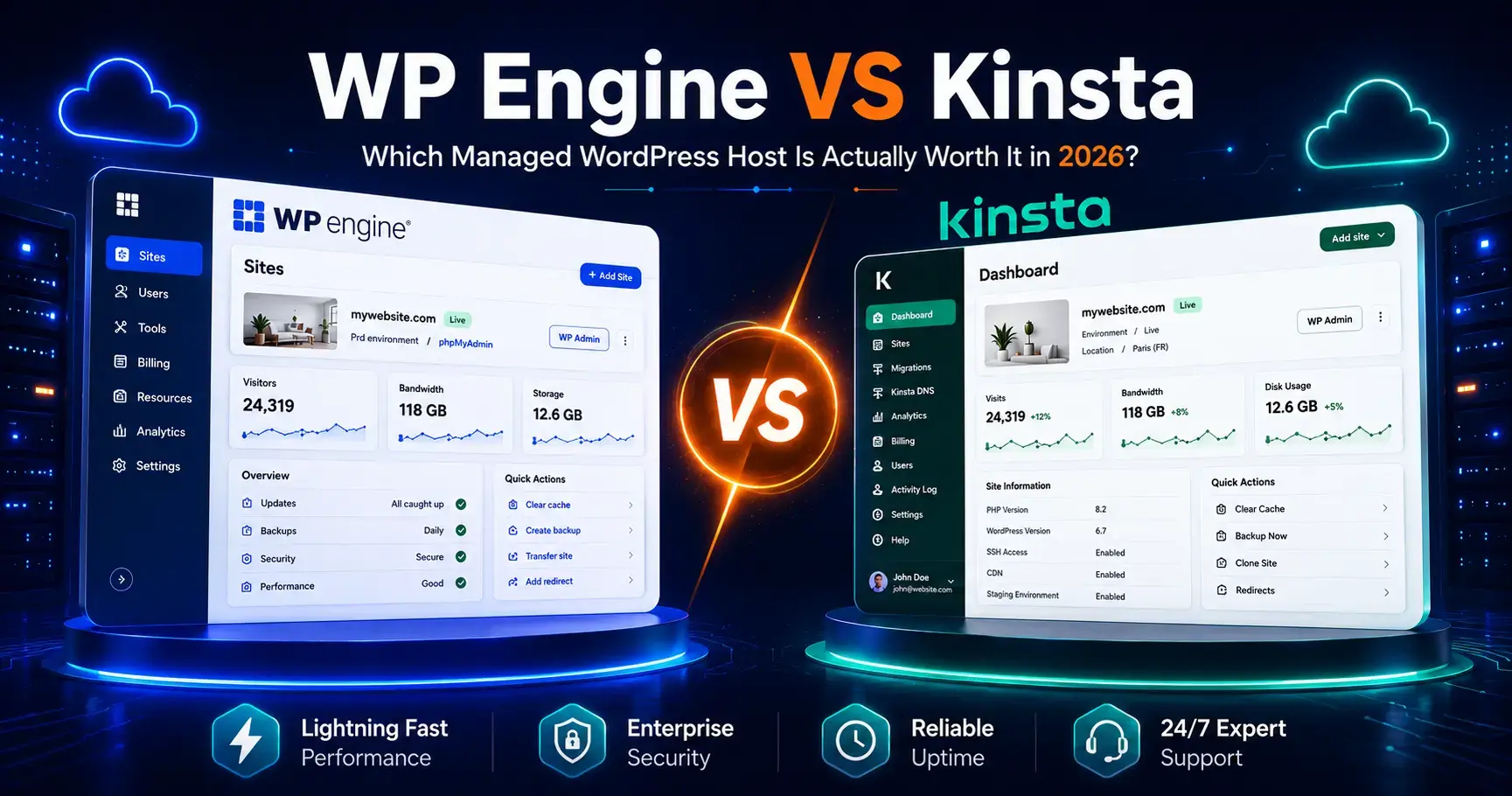
| Kinsta | Single-site Business from $30/mo billed annually | Premium managed WordPress | Agencies, developers, business-critical WordPress |
Budget and Beginner Hosting
Hostinger, DreamHost, Bluehost, SiteGround, GreenGeeks, and Hosting.com all compete for smaller websites, but they package resources differently. Hostinger emphasizes low introductory pricing and hPanel. DreamHost offers 25 websites and 25 GB NVMe on Launch. Bluehost bundles staging, CDN, and guided WordPress tools. SiteGround emphasizes managed caching, daily backups, and support. GreenGeeks offers 25 GB storage with eco-focused positioning. Hosting.com emphasizes LiteSpeed, NVMe, and transparent server resources.
Managed Cloud Hosting
Cloudways is different from conventional shared hosting. Its Flexible platform starts around $11 per month on DigitalOcean and uses pay-as-you-go billing. It is better evaluated as managed cloud infrastructure rather than a direct substitute for a $3 shared-hosting plan.
Premium Managed WordPress Hosting
Rocket.net and Kinsta target higher-value WordPress workloads. Rocket.net Starter includes 250,000 visits and Cloudflare Enterprise at $25 per month when billed annually. Kinsta starts around $30 per month annually and offers visit-based or server-bandwidth-based plans plus staging, migrations, APM, API access, and managed WordPress tooling.
How to Choose a Hosting Provider
Compare the full contract cost, not only the introductory monthly price. Check renewal pricing, website limits, storage, backup frequency, staging, email, migration, CDN, support channels, and how easily the plan can scale.
Also match the hosting model to your project. A simple blog may not benefit from premium managed WordPress hosting. A revenue-generating store or agency portfolio may justify paying more for staging, stronger backups, isolation, expert support, and predictable scaling.
HostHuby Comparison Guides
Explore our detailed comparisons: Bluehost vs Hostinger, SiteGround vs Bluehost, SiteGround vs DreamHost, WP Engine vs Kinsta, Cloudways vs Kinsta, and Rocket.net vs Kinsta.
Frequently Asked Questions
What should beginners compare first?
Start with total first-term cost, renewal price, number of websites, storage, backups, domain and email inclusion, and the quality of the dashboard and support.
When is managed cloud hosting worth it?
Managed cloud hosting becomes useful when you need more infrastructure control, scalable server resources, multiple applications, or a pay-as-you-go model.
When is premium managed WordPress worth it?
It is easier to justify for revenue-generating sites, high-traffic publishers, agencies, and businesses where downtime, slow deployments, security incidents, or weak support have a meaningful cost.
Final Comparison
The most useful web-hosting comparison is based on your site’s requirements rather than a universal winner. Use budget hosting for simple sites, managed cloud for flexible infrastructure, and premium managed WordPress when developer workflow, security, support, and performance management justify the extra cost.