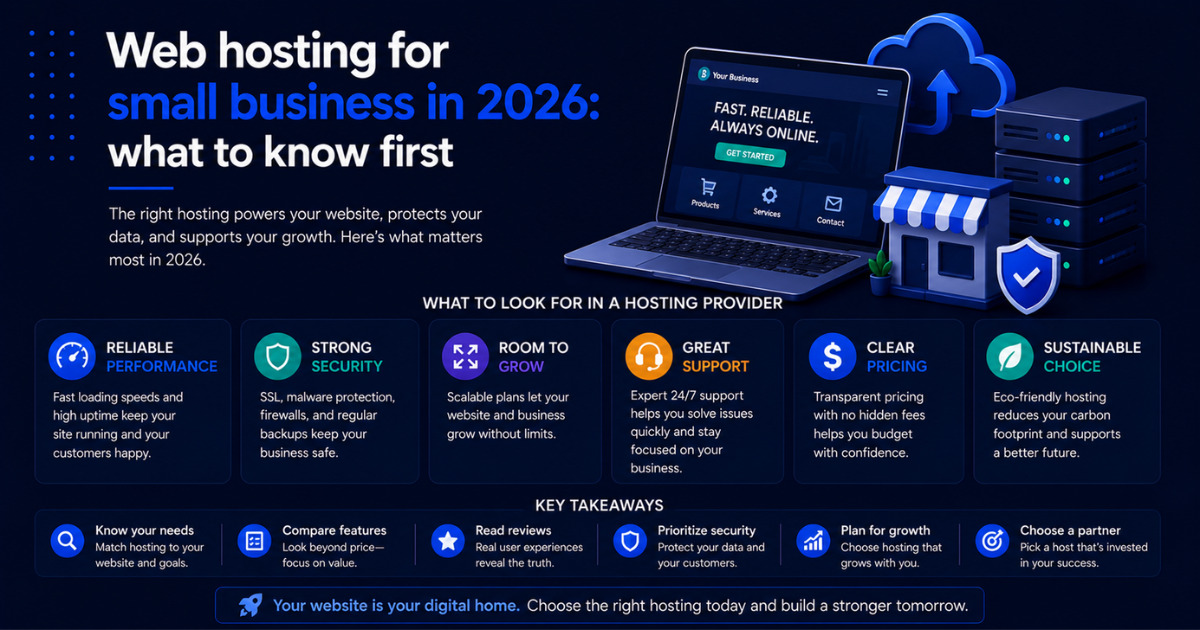
Web hosting for smaill business in 2026 : what to know first
Affiliate Disclosure: This article contains affiliate links. If you purchase a hosting plan through one of our links, we may earn a commission at no extra cost to you. Our recommendations are based on independent research and real-world testing. We only recommend services we genuinely trust.
Choosing the right web hosting for small business is one of the most important decisions you will make for your online presence, and it is one that most business owners get wrong the first time. The pattern I see most often is one of two mistakes. Either a business owner grabs the cheapest shared plan and outgrows it within six months, or they overbuy, paying for a dedicated server when a solid managed VPS would have done everything they needed at a third of the cost.
Web hosting for small business has different requirements than hosting for a personal blog or a developer’s side project. You need reliability that matches real business stakes, a management interface that does not require a computer science degree, and support that actually answers when something breaks on a Saturday afternoon.
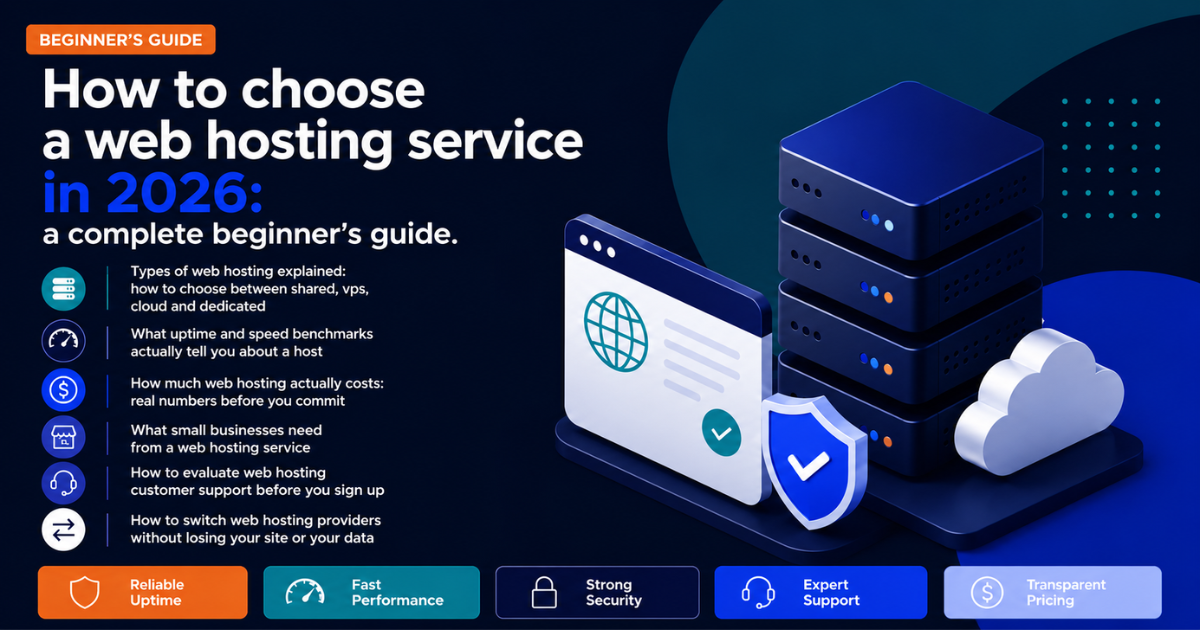
If you are still working through the broader hosting decision, our complete guide on how to choose a web hosting service in 2026 covers every decision factor from start to finish. This guide focuses specifically on what small businesses need and how to evaluate whether a host can actually deliver it.
From what we have tested across dozens of providers, [] SiteGround [] consistently stands out as the most well-rounded option for small business owners who need reliability, strong support, and a clean management interface without hiring a developer.
[] Visit SiteGround – Check Small Business Plans []
What web hosting for small business actually means
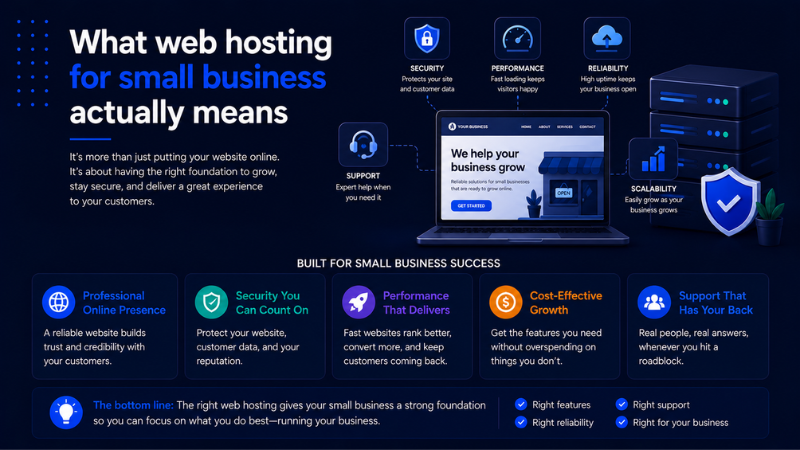
The term gets used loosely by hosting providers. Some hosts market business hosting as a premium shared plan with a slightly higher resource allocation and a different label. Others offer genuinely distinct infrastructure designed for higher traffic, transactional workloads, and professional reliability standards.
For the purposes of this guide, web hosting for small business means hosting that supports all of the following.
- A primary business website that generates leads, bookings, or direct revenue
- Potentially an eCommerce component such as a store, booking system, or client portal
- Between 5,000 and 150,000 monthly visitors depending on the business type
- A site owner who needs the hosting to work reliably without constant technical intervention
That profile is different from a personal blog or portfolio site, and it changes which features actually matter when evaluating providers.
The features that actually matter for small businesses
Web hosting for small business starts with reliability
For a personal blog, an hour of downtime is an inconvenience. For a business running Google Ads or Meta campaigns, an hour of downtime during peak hours is a direct financial loss. Every click your ad sends to a down site is money out the door with no return.
Web hosting for small business needs to deliver consistent uptime above 99.95%, verified through independent monitoring rather than self-reported SLA numbers. Page load speed matters just as much. According to Google’s research on page experience, conversion rates drop measurably as load time increases beyond two seconds. A site that takes four seconds to load on a mobile connection loses a meaningful percentage of visitors before they ever see your offer.
Ease of management without technical expertise
Most small business owners are not developers. They need to update a page, add a product, set up a new email address, or restore a backup without filing a support ticket or watching a 45-minute tutorial.
The hosting control panel is the primary interface between a non-technical business owner and their hosting environment. cPanel remains the most widely supported and documented control panel in the industry. Managed WordPress hosts like Kinsta and WP Engine use custom dashboards that are cleaner and more beginner-friendly but less flexible for non-WordPress workloads. For a business running exclusively on WordPress, a managed WordPress host’s custom dashboard is often the better choice.
Professional email hosting
A business email address at your own domain is baseline professional credibility. Things to verify before assuming the included email is adequate for web hosting for small business use.
- Storage per mailbox: look for at least 10GB per mailbox to avoid filling up within the first year
- Spam filtering: better providers include sophisticated filtering that catches modern phishing attempts
- Deliverability: hosts that offer dedicated IPs for email sending are worth the small premium for business use
- Webmail client: Roundcube is the standard included with most cPanel hosts and is functional for daily use
For high-volume transactional email such as order confirmations, booking notifications, and password resets, use a dedicated service like Postmark or Amazon SES regardless of what your host offers. These services are built for deliverability in a way that standard hosting email is not.
eCommerce readiness
If your small business sells anything online, your web hosting for small business needs to support it reliably. A few things to confirm before committing to a host for eCommerce use.
SSL must be included and properly configured. Every eCommerce site needs HTTPS. Reputable hosts include free SSL through Let’s Encrypt. If a host charges extra for SSL in 2026, move on.
WooCommerce is resource-intensive compared to a standard WordPress blog. A basic shared plan that handles a blog fine can buckle under the database load of an active WooCommerce store. If you are running WooCommerce with more than a few hundred products and regular orders, you need at minimum a managed WordPress host with WooCommerce-specific optimizations or a VPS with 4GB RAM and NVMe storage.
PCI DSS compliance is required for any site involved in card payment processing. Most reputable hosts are PCI compliant at the infrastructure level. Your responsibility is ensuring your payment integration, typically a gateway like Stripe or Square that keeps card data off your server, does not introduce compliance gaps.
Which hosting type makes sense for which business
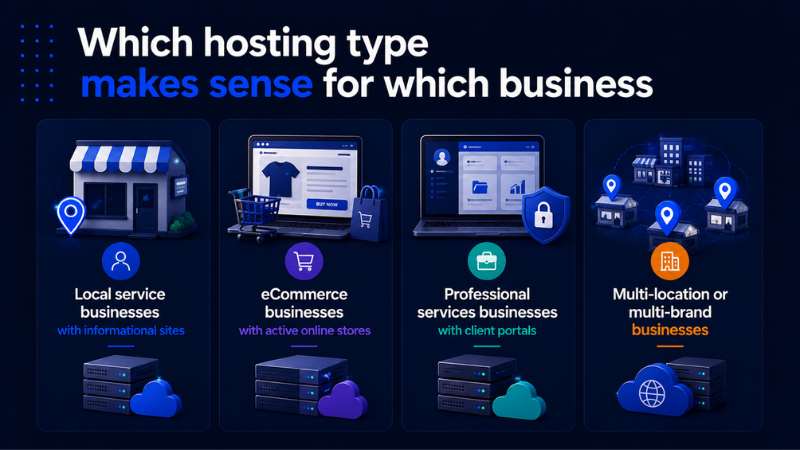
Not every small business needs the same web hosting for small business tier. Here is a practical framework for matching your business type to the right infrastructure.
Local service businesses with informational sites
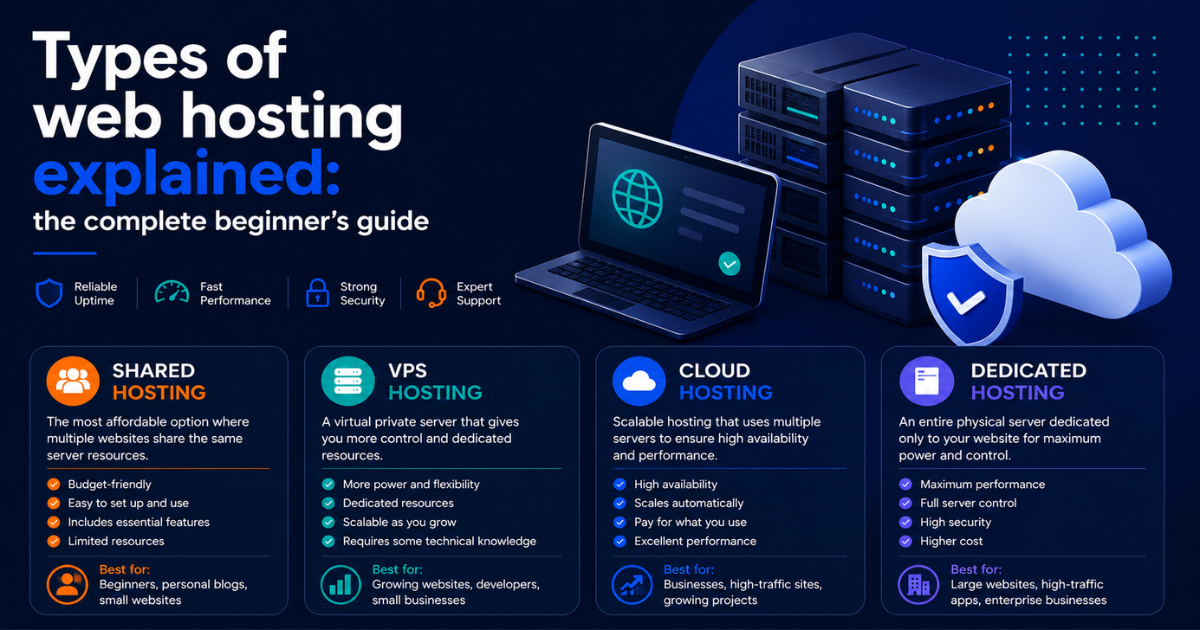
A plumber, a dentist, a landscaping company, a law firm. If your website is primarily informational and generates leads through contact forms or phone calls rather than direct online transactions, shared hosting from a quality provider is genuinely sufficient.
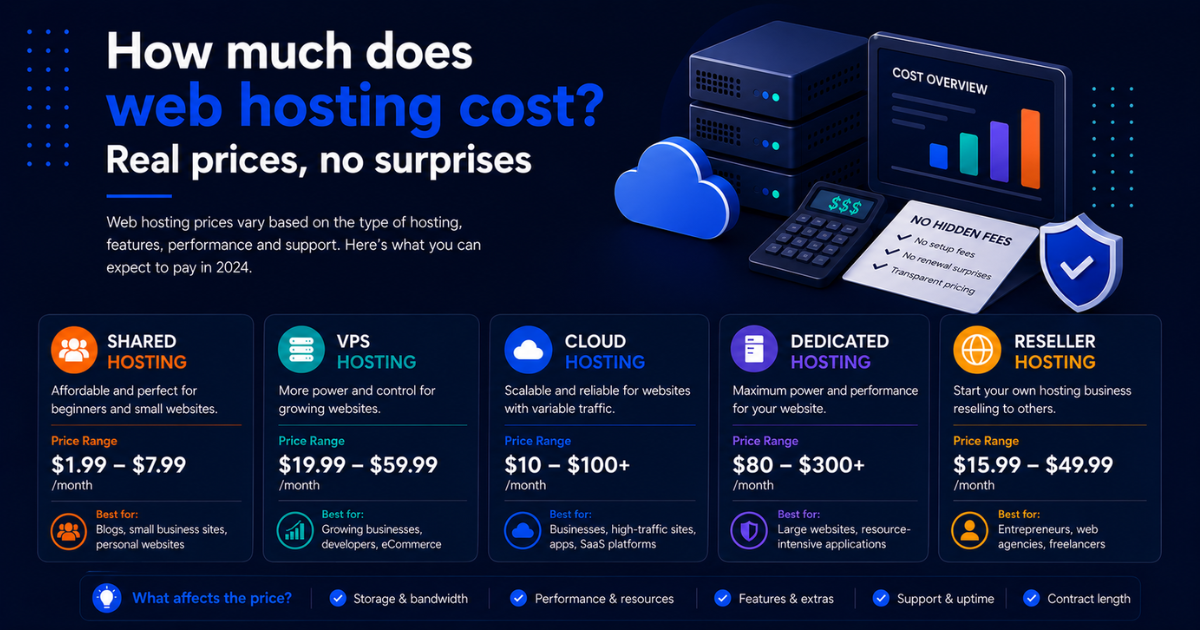
What matters for this profile is reliability, fast load times, and a host that answers when you need support. Budget $5 to $15 per month and focus your energy on the website content and local SEO rather than the hosting tier.
eCommerce businesses with active online stores
If you are processing orders online, shared hosting is a liability for web hosting for small business purposes. The database queries from an active WooCommerce store, combined with the traffic variability of a real eCommerce business, will push a shared plan past its limits faster than you would expect.
For a store doing up to a few hundred orders per month, a managed WordPress host with WooCommerce optimization is a practical choice. For higher volume stores, a managed VPS with 4GB RAM and NVMe storage gives you more flexibility and control.
Professional services businesses with client portals
Consultants, agencies, accountants, and similar businesses often need more than a standard website. These workloads benefit from a VPS environment where you have more control over software configuration and can ensure the performance isolation that shared hosting does not provide.
Multi-location or multi-brand businesses
If you are managing websites for multiple business locations or running several brands from one hosting account, look for a host that offers either an unlimited website reseller account or a VPS you can configure to host multiple domains efficiently.
Hosting type matched to business profile
| Business type | Typical hosting need | Recommended tier | Avg. monthly cost |
|---|---|---|---|
| Local service business | Informational site, contact form, local SEO | Shared hosting | $5 to $15 |
| eCommerce store | Active transactions, variable traffic, PCI compliance | Managed WordPress or VPS | $30 to $80 |
| Professional services | Client portal, document sharing, project integrations | VPS | $20 to $60 |
| Multi-location business | Multiple domains, centralized management | VPS or reseller account | $30 to $100 |
Our hosting recommendations for small businesses in 2026
Here are the three providers we recommend most often for small business owners, based on real-world testing, independent uptime data, and support quality evaluations specifically relevant to web hosting for small business use cases.
| Host | Starting price | Best for | Free SSL | Support | Deal |
|---|---|---|---|---|---|
| SiteGround | $2.99/mo | WordPress, local business | Yes | 24/7 phone and chat | [] See Deal [] |
| Hostinger | $2.99/mo | Budget-conscious businesses | Yes | 24/7 chat | [] See Deal [] |
| Cloudways | $14/mo | eCommerce, growing stores | Yes | 24/7 chat | [] See Deal [] |
What to avoid when buying business hosting
A few patterns consistently cost small business owners money when choosing web hosting for small business.
Bundling domain and hosting without checking prices separately
Domain registration from a hosting company is often priced at $15 to $20 per year when independent registrars like Namecheap and Porkbun charge $10 to $12 for the same domain with free WHOIS privacy included. Registering your domain separately from your hosting saves money and gives you more flexibility if you ever need to switch providers.
Choosing based on the promotional price alone
A plan advertised at $2.99 per month that renews at $14.99 per month costs $179.88 in year two, not the $35.88 the headline suggested. Always check the renewal rate before signing up for any web hosting for small business plan.
Underestimating email storage needs
Shared plans with 500MB mailboxes fill up faster than expected for active business email accounts with attachments. Confirm mailbox storage limits before signing up or plan to use Google Workspace or Microsoft 365 for email from the start.
Skipping independent backup verification
Always verify what your host’s backup policy actually covers, how far back restore points go, and how long a restoration actually takes. Then run your own independent backup solution regardless of what the host provides. A backup you have not tested is not a backup you can rely on.
A simple decision framework for small business hosting
Before signing up for any web hosting for small business plan, answer these four questions honestly.
First, will your site process transactions or just generate leads? Transactions require better infrastructure, SSL, and PCI awareness. Lead generation sites have more flexibility on hosting tier.
Second, what is your realistic monthly traffic? Under 20,000 visitors per month, shared hosting from a quality provider handles the workload. Above that, a VPS or managed cloud plan is the safer and more reliable choice.
Third, how technical are you willing to get? If the answer is not at all, managed hosting is worth paying the premium for. The time you save on server administration alone justifies the cost difference.
Fourth, what happens if your site goes down for two hours? If the honest answer is that you lose significant business, your web hosting for small business decision should reflect that risk. Invest in a tier and provider whose uptime track record and support responsiveness match the actual business stakes.
According to Cloudflare’s research on website performance and business impact, even a one-second delay in page load time can reduce conversions by up to 7%. For a small business generating $10,000 per month in online revenue, that is $700 per month in lost sales from a single second of slowness.
Picking the right web hosting for small business comes down to matching your actual traffic, your technical comfort level, and the real business cost of downtime to the right infrastructure tier. Overpaying for resources you do not use and underpaying for reliability you genuinely need are both expensive mistakes in different ways.
For most small business owners launching or upgrading their first professional site, [] SiteGround [] hits the right balance of performance, support quality, and transparent pricing. Their managed WordPress plans include daily backups, free SSL, and a staging environment that makes updating your site significantly less stressful.
[] Visit SiteGround – See Current Small Business Pricing []
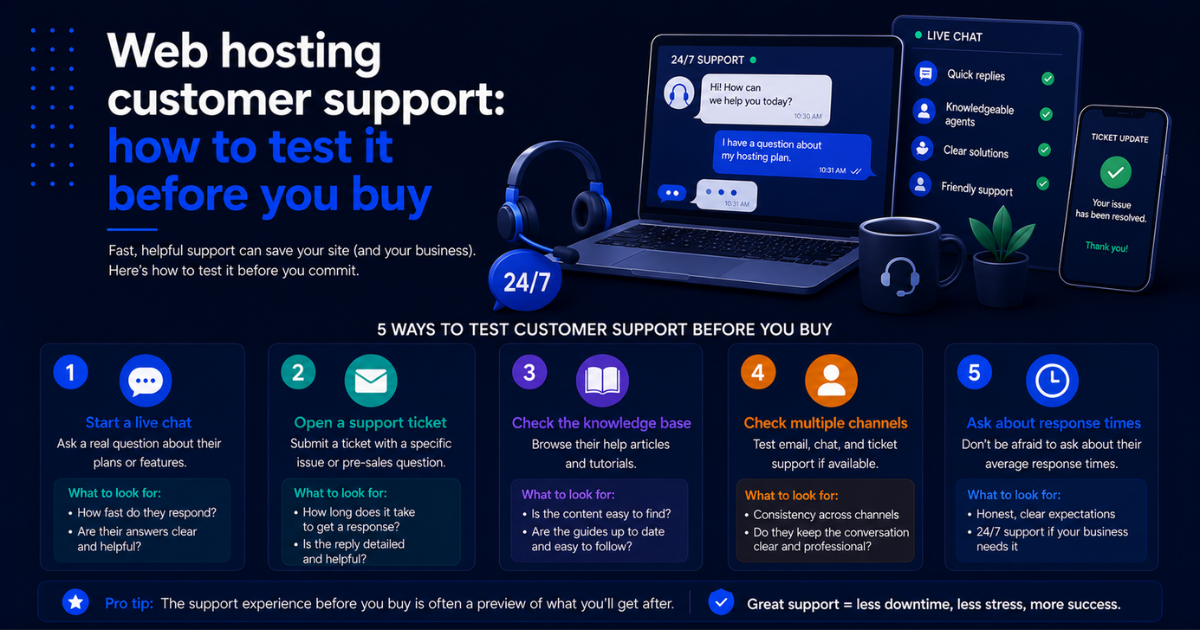
Once you have chosen your hosting tier and provider, the next variable that separates satisfying hosting experiences from frustrating ones is what happens when something breaks. Our guide on how to test web hosting customer support before you commit walks through a concrete process for evaluating any host’s support quality before you sign a contract or migrate anything important.